


With all the recent announcements that we are seeing with Proxmox as of late, it has made me stop and think about what the future holds for the platform. The momentum that we see now with Proxmox reminds me of the early VMware days circa 2004-2005. The excitement for the platform continues to grow as Broadcom continues to do Broadcom things. Also, Proxmox just a few days ago announced 24×7 support that I think really is going to be the catalyst for explosive growth from this point forward. Also, with TrueNAS now offering an official plugin this signals a shift in what I think we will continue to see. Here are my five Proxmox storage predictions for 2027.
1. More storage vendors will release official Proxmox integrations
This one is one of the more easy predictions to make. I think we are about to see a massive shift starting to happen not only in home labs but also enterprise environments. Proxmox has supported enterprise storage types for years with support for all the familiar protocols and technologies. These include storage like NFS, iSCSI, Fibre Channel, Ceph, ZFS, and SMB and CIFS for certain content.
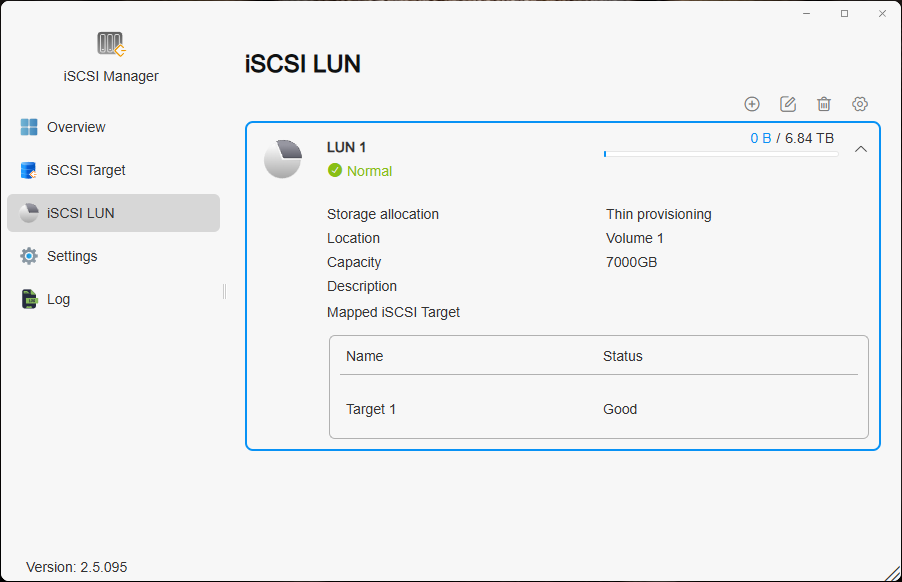
The compatibility that Proxmox offers is definitely won of its strengths. But, to go along with that though, basic support doesn’t necessarily mean “first class” support. This is where I think Proxmox is poised to take off. Part of what has made VMware awesome over these past couple of decades is the absolutely insane number of integrations and plugins that we have had access to. This is especially true in the area of storage.
Proxmox as mentioned already has great storage capabilities. But “basic” protocol support is not the same thing as it being premium or first calss support. With Proxmox and certain storage types, you can connect it, but you know there is still quite a bit of manual work ahead to get everything in place that needs to be on the storage side.
You may have to create things like volumes, extents, targets, LUN mappings, and other things manually. Then, if you get rid of LUNs you may have to clean everything up after the disk is removed.
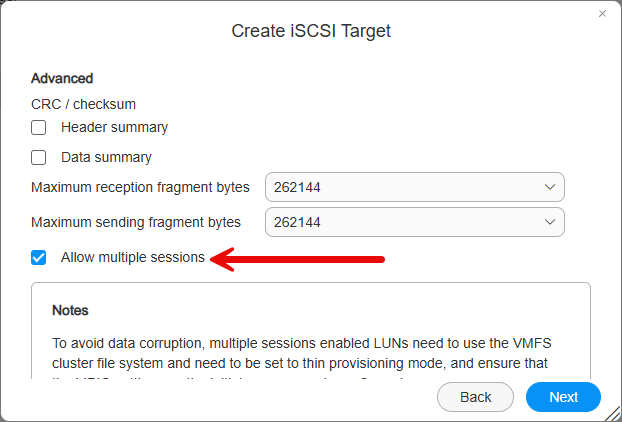
I think this is where the new TrueNAS Proxmox plugin is starting to signal that shift. With the way this plugin works, Proxmox communicates with TrueNAS using the API and it is able to automate the underlying storage provisioning. So instead of all that manual work, an admin can now just create a virtual disk from Proxmox and then the plugin coordinates with TrueNAS to handle all the details (zvol, extent, mapping, and storage objects, etc). This is more what we have come to expect for those who are coming off VMware.
Now, with Proxmox adding 24×7 support, this is also going to change the business side of things for storage vendors. They know that now that Proxmox has true 24×7 support, it means Proxmox is going to be much more of a serious contender in the enterprise space. So, they have a much stronger incentive to provide it to customers.
My prediction is we will continue to see this the rest of this year and getting even more so in 2027 and beyond. I suspect we will see traditional storage array vendors and other storage companies start to offer plugins and also announce official support and validated architectures for Proxmox.
2. Proxmox storage will move beyond generic NFS and iSCSI connections
Going along with the first point here that storage vendors are going to “up” their game with Proxmox support and integration, this will extend to NFS and iSCSI. Proxmox already can do both of these. What I expect that we will start seeing is that the intelligence layer on top of these protocols will be added.
We will see many more API-driven integrations that will make seeing all the details much more granular and easy. Much like what TrueNAS is doing, Proxmox will simply request what it wants, and the storage platform will perform those actions using its own native functionality.
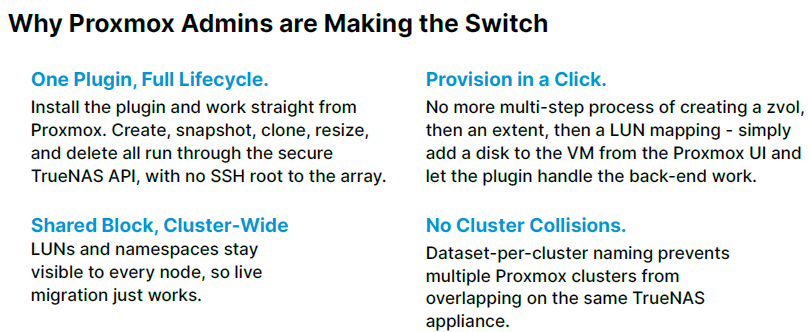
The transport type will still be iSCSI and NVMe over TCP. But with more intelligence from various storage vendors, the connections made with iSCSI and these other protocols becomes lifecycle aware for your workloads. This is where I think Proxmox storage is heading.
Admins will be able to keep using the familiar Proxmox interface. Then they will have more actions that will be passed directly on to the storage platform. Again, this will cut out the need for even more of the manual actions and admin work.
3. Per-VM storage objects will become much more important
I think we are going to see more of what I think is interesting about this new TrueNAS storage integration. It treats virtual disks like individual storage objects and is akin to what we know of in the VMware world as VVOLs.
So, instead of creating one large datastore or LUN and then putting all your VMs on that gigantic LUN, we will instead map each virtual disk to its own zvol or storage object. This will give us a lot of control over the configuration for virtual disks, but it is also more efficient.
This may also give us more things like per-VM replication, QoS policies, snapshot schedules, and performance tiering. But also, you wil see things like more encryption choices and recovery options. So it is moving into that same direction where you have the underlying storage take care of the operations.
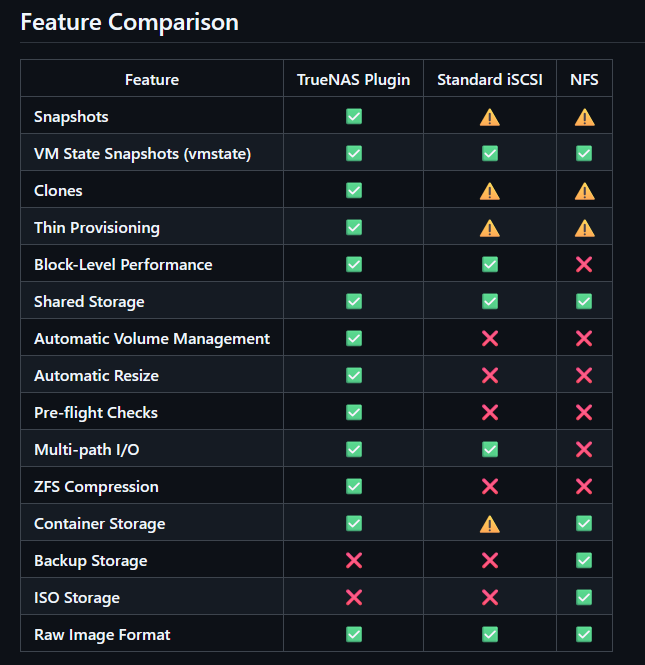
So for instance, those that are coming from VMware environments, these are used to things like array-based snapshots. But not just that. They are used to other constructs like storage policies, replication tooling, and workload visibility.
So, keep your eyes open as more and more storage integrations will definitely start appearing in 2027 and beyond.
4. NVMe over TCP will become a normal Proxmox storage choice
Most of us even in the VMware world are most familiar with NFS and iSCSI. In Proxmox we are also familiar with those options along with Ceph HCI storage for hyperconverged infrastructure.
For many administrators, shared Proxmox storage still means NFS, iSCSI, or Ceph. NVMe over TCP is available, but it is not yet the default choice for most home labs or smaller business environments. However, the newer NVMe over TCP is going to get even easier to install with new storage integrations.
The NVMe over TCP protocol carries NVMe commands across a standard TCP/IP network. But the interesting thing is that you don’t have to have all NVMe to take advantage of this. On the flip side, it doesn’t make hard drives perform like NVMe, but it is a newer and more efficient protocol.
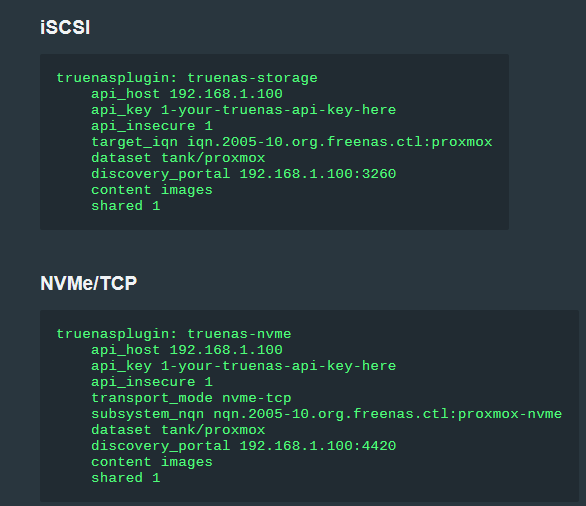
But this means it will still be a great opportunity to learn in the home lab environment since we can use NVMe over TCP. We don’t have to have all NVMe arrays and 100 gig networking to get our “hands dirty” with it. The TrueNAS plugin already offers both iSCSI and the NVMe over TCP transport options. I don’t think that NVMe over TCP will replace iSCSI any time soon. But I think we are going to see much more of it in normal operations.
5. Storage integration will make a difference in which VMware migrations succeed
This will also lead to major storage wars happening to win the battleground for VMware projects having to do with migration. Storage vendors who position themselves to support Proxmox early on are going to e in a good position with the migration business that is already ramping up.
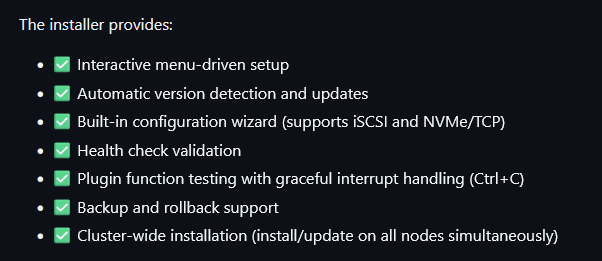
Many businesses have spent years building their technology workflows with VMware around their storage arrays. This includes things like array-based snapshots, replication, multipathing, automation, etc. Even their backup integrations and DR strategies relate to these storage technologies. So with this, a company can really like Proxmox. But if their particular storage platform isn’t supported, then this is a death knell for their migration project.
This is why, again, the announcement of 24×7 support is going to be the catalyst for storage vendors to support Proxmox and to do this very early on to gain access to those customers who are making the jump to Proxmox from VMware.
What I don’t think will happen
I don’t think this is going to mean that simple, traditional Proxmox storage configurations will be obsolete. NFS is going to remain one of the easiest ways to provide shared storage with a Proxmox cluster. Conventional iSCSI will also stay useful when businesses need broad compatibility. And, Ceph will be the choice for organizations who want that deeply integrated HCI storage solution without the need for external storage arrays.
Also, I don’t think that these new storage plugins will be production ready overnight. It is going to take some time and “miles behind them” to gain comfort with their stability, support, and performance before organizations will trust them. I think it will take time to validate snapshots, rollbacks, migrations, multipathing, etc.
Home labs are going to benefit from all of this since we will be able to get our feet wet testing many of these new vendor storage plugins, like TrueNAS. So, exciting times ahead.
Wrapping up
So long story short, the TrueNAS plugin is exciting on its own, but I think there is a larger story here. It tells us that the Proxmox ecosystem is healthy and about to get even more support and buy-in from other storage companies. I think more storage companies are going to recognize that Proxmox is no longer a platform they can dismiss as a “home lab hypervisor” and that it has real “legs” under it to move into the place of VMware in the SMB and enterprise. What are your thoughts here? Have I hit things on the head or do you think it will go a different direction? Let us know in the comments.
More in this topic

Google is updating how articles are shown. Don’t miss our leading home lab and tech content, written by humans, by setting Virtualization Howto as a preferred source.
About The Author