



So I think, in my opinion we have an even more rounded out list for virtualization platforms heading into late 2026. The list below is definitely an opinionated list, but opinionated from the standpoint of what I see users mentioning they are going towards in 2026 for home lab and also for those mentioning what they are migrating to in their day jobs. These are what I think are the 8 best hypervisors in late 2026 and the ones I think are worthy of your attention.
1. Proxmox VE Server
Proxmox VE Server is at the top of my best hypervisors 2026 list if you are looking for the best bang for the buck and what can actually run your workloads at an enterprise level in 2026. In the 9.2.x family of Proxmox VE Server, Proxmox has released some really great features that put it more on par with what ones may be used to using VMware in the enterprise.
Most are now using it in the home lab environment from what I have seen by far and many organizations are at least considering Proxmox VE in their short list of what they are migrating to with the Broadcom price hikes. I am currently running my “production” home lab environment on Proxmox and have no complaints. It is great.
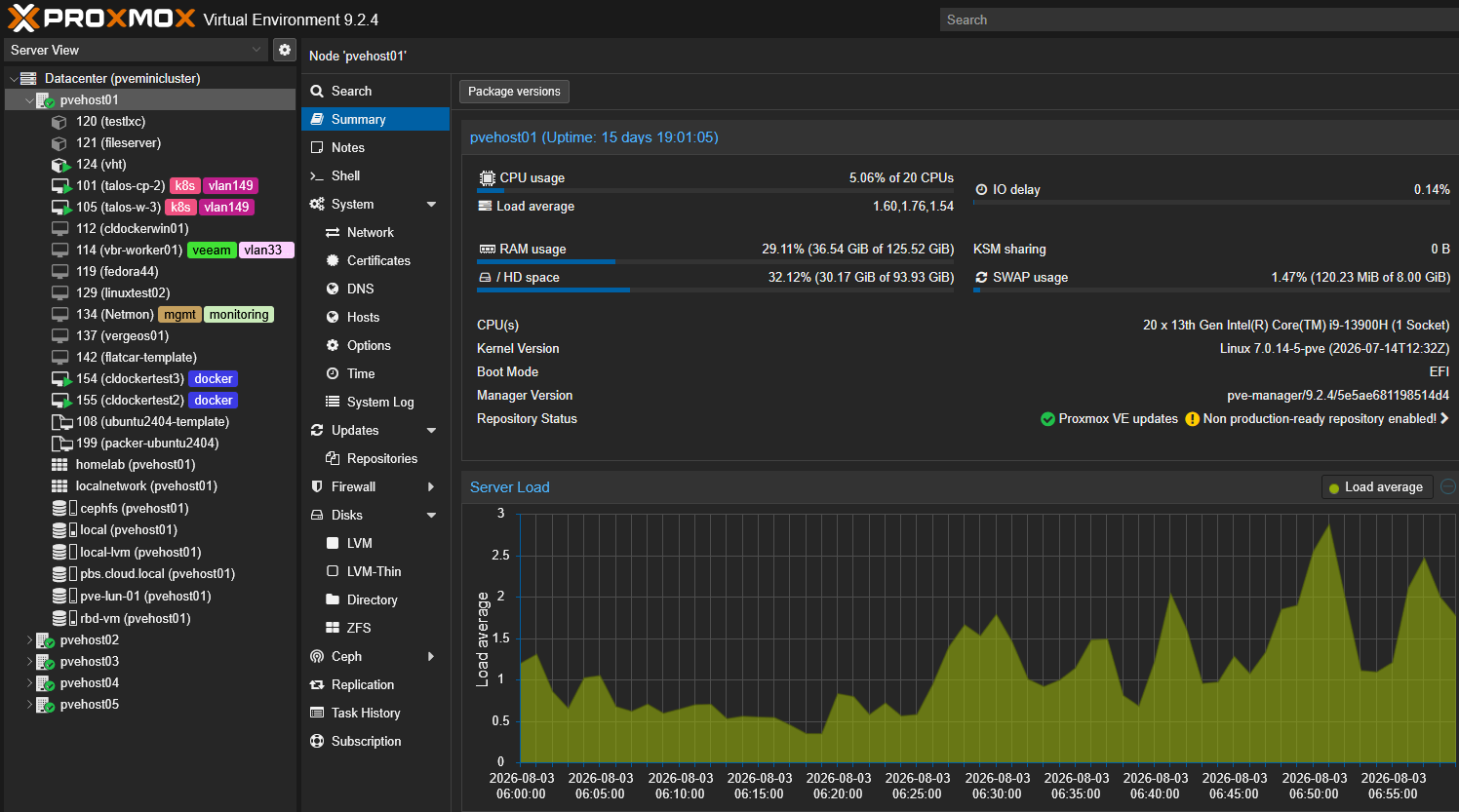
I have Ceph HCI storage running as shared storage between my Proxmox nodes and this allows me to have production shared storage between all my nodes so that I can migrate workloads freely between them and not have a single point of failure storage device like a NAS for my home lab workloads.
In my home lab, I am running Proxmox SDN networking for a centralized networking management experience between my nodes as well. I started off with traditional Linux bridges in my environment, but now Proxmox SDN is akin to having VMware vSphere Distributed switches. This allows having that centralized control plan for networking and making sure this is consistent between my hosts.
In the latest releases of Proxmox this year, they have added dynamic load balancer and expanded SDN capabilities, including WireGuard SDN fabrics. You now have more granular custom CPU model management, updates to the underlying tech stack and many other improvements.
The dynamic load balancing feature is one that many have been waiting on to give them the VMware DRS-like feature that provides a more automatic way to balance out resources across the cluster.
The other Proxmox-native solutions like Proxmox Backup Server (PBS) have also improved this year quite a bit. The release of Proxmox Backup Server 4.x this year has been a great new release and it has brought about a lot of new features in conjunction with Proxmox VE Server 9.2. This I think makes Proxmox at the top of my list in late 2026 as a virtualization platform.
2. Microsoft Hyper-V
Microsoft Hyper-V is a hypervisor that I think a lot of admins have “wanted” to love for years, but it just has never really quite made it. Most of this I think is Microsoft’s own doing as they never really gave us a management tool that was great with Hyper-V. To get all the seamless features, you need System Center Virtual Machine Manager and this interface looks like it is out of the early 2000’s.
Windows Admin Center to me still hasn’t really totally delivered on the all-inclusive interface that allows you to do everything under a single pane of glass. It’s getting there but still not fully baked. It still seems like there are things in 2026 that we have to drop to Hyper-V Manager to do.
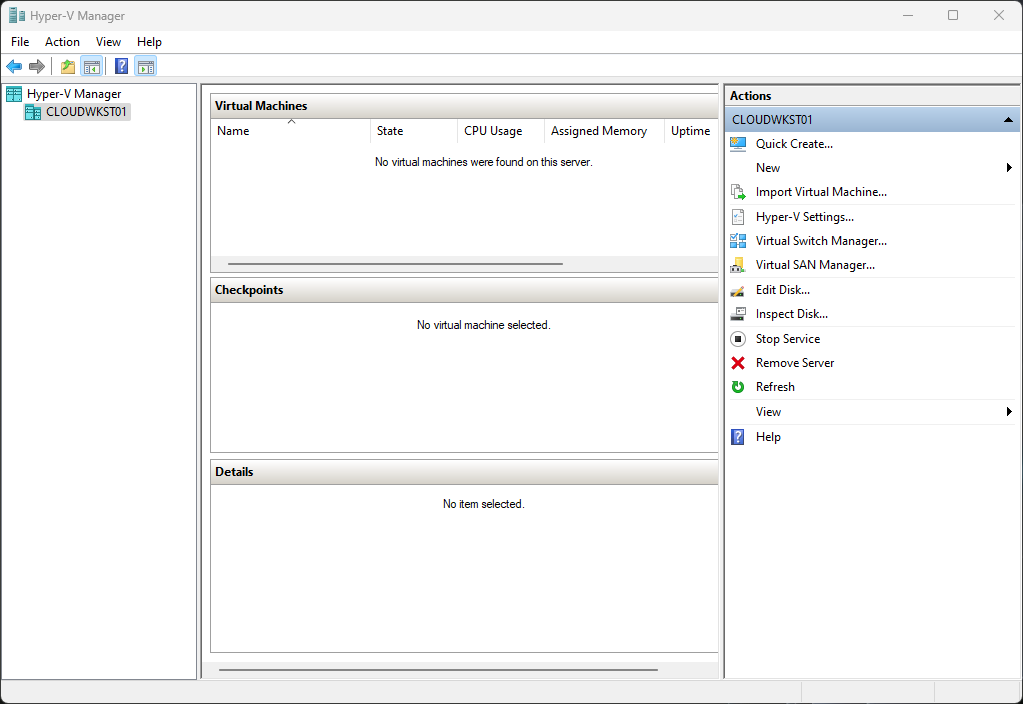
But despite these things, Microsoft still hasn’t given up on Hyper-V and with all the developments with VMware since the beginning of 2024, I think it has now become a real contender once again on the best hypervisors 2026 list. Many are heavily invested in Microsoft licensing for Windows already, so there is no additional cost. Windows Server 2025 also has some really cool improvements that directly relate to Hyper-V. It now has some really large configuration maximums with the OS like 4 petabytes of memory and 2048 logical procs, along with GPU partitioning.
I don’t think Hyper-V still has as good of an interface as something like Proxmox. It isn’t as intuitive and Microsoft has still made it clear they are pushing hard towards the cloud as I have always thought eventually, we will be forced to license and enable everything from Azure, including Hyper-V. All of this said, it is still a great option in 2026, maybe not as much for home lab as you would have to have Windows licensing, but is very strong for enterprise environments.
3. XCP-ng
XCP-ng is another one that has grown tremendously in the race for alternatives in the enterprise space and I thin it is a great option. The current XCP-ng 8.3 release is an LTS release and the project continues to include regular security, Xen, Linux kernel, and maintenance updates through 2026. Since 8.2 is now end of life, be sure to do your testing on version 8.3.
Xen Orchestra from Vates is one of the coolest parts of the solution that provides a very VMware vCenter like solutions for centralized management. So, organizations that want to keep very close with the VMware operational model, can make use of XO as a very similar architecture. Based on Xen it has a lot of miles behind it and a lot of maturity that I think makes it and even easier choice for many.
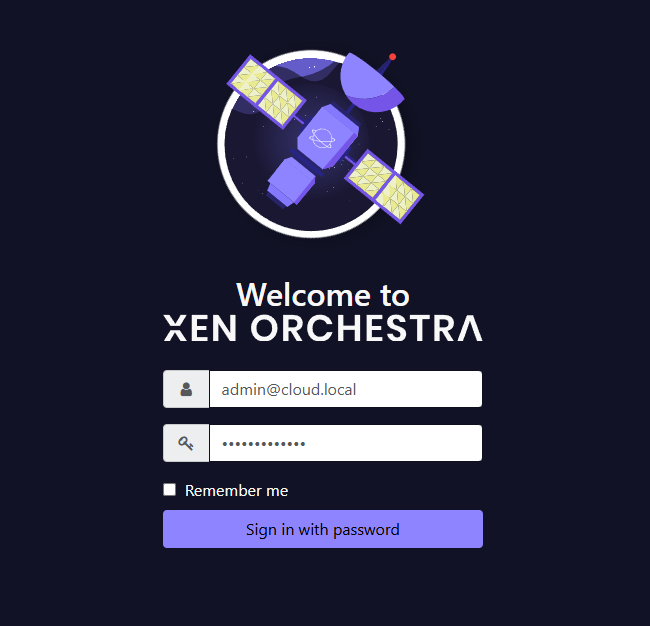
However, I do think other solutions like Proxmox make it easier to freely use the platform than XCP-ng. It is a free hypervisor, but for things like updates, you have to compile fresh releases of XO as an example to get the latest and greatest. I really wish Vates would align more with how Proxmox offers community repos for updates on this front as it just isn’t as straightforward.
Even though XCP-ng isn’t as popular as Promox, I still think it is a highly mature solution that gives you a great choice in the home lab or production environments for an entry on the best hypervisors 2026 list.
4. Red Hat OpenShift Virtualization
The OpenShift Virtualization stack is one of the enterprise solutions that many at least think about when looking at production-ready solutions in the enterprise. I think especially for those that are looking at running and migrating over to more containerized workloads, OpenShift virtualization is very strong for this use case.
With it, you can run your VMs along with containers in the environment using Kubernetes native resources in OpenShift. Red Hat positions Openshift as a unified platform for your VMs and containers. You can also use it for serverless apps, hybrid cloud, and modernizing your apps.
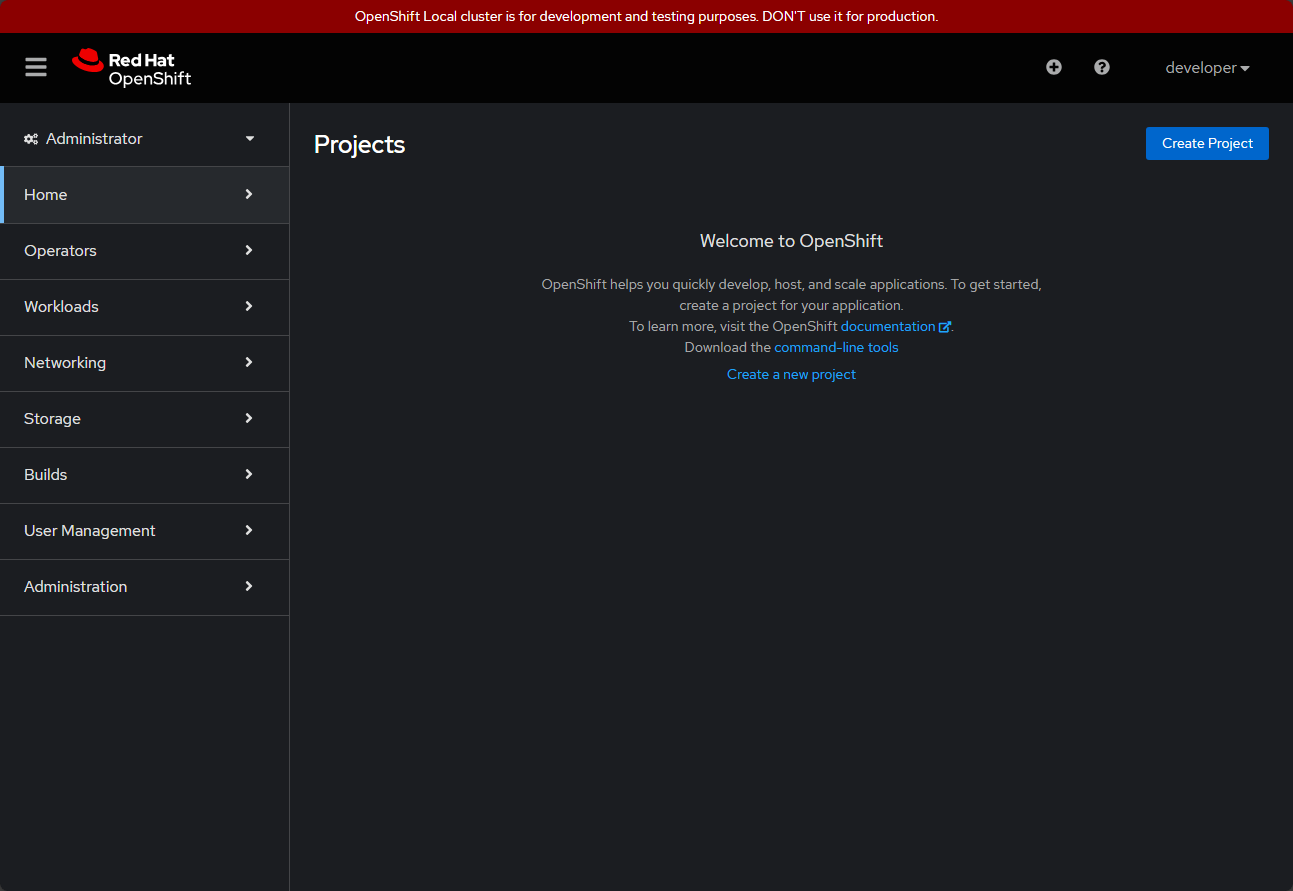
OpenShift virtualization release 4.21 became available around March 2026 and it introduced a lot of features around simplifying your VM management. They have also introduced OpenShift Virtualization Engine as a more traditional virtualization-focused platform for businesses.
They do have an Openshift Local platform that is touted as a local development environment that I could see as a home lab of sorts for testing out the solution. I tested this out on a Windows 11 machine: OpenShift Local on Windows 11 and Troubleshooting Errors.
Keep in mind though that OpenShift is not known for being the easiest platform. So if you are looking for something to go quickly from VMware, OpenShift isn’t the easiest platform and has a learning curve with it that must not be underestimated for businesses looking to migrate there from VMware. Due to its momentum though and interest in the enterprise, it has a spot on the best hypervisors 2026 list in my opinion.
5. HPE Morpheus VM Essentials
HPE Morpheus is an interesting newcomer on the list. Since the Broadcom meltdown with VMware, HPE has moved quickly with Morpheus to provide a strong alternative for businesses looking to migrate. They are also providing some preetty serious cuts in licensing and other incentives to hopefully win those migrations off VMware.
When you adopt the platform, it includes the HPE HVM hypervisor (built on KVM). It also has centralized VM management and things like live migration, HA, strong networking, etc. You can also manage VMware and HVM environments together. They have had a lot of new features added in the latest releases like automated HVM cluster upgrades, new networking features, security groups, affinity rules, NUMA-aware vCPU, etc.
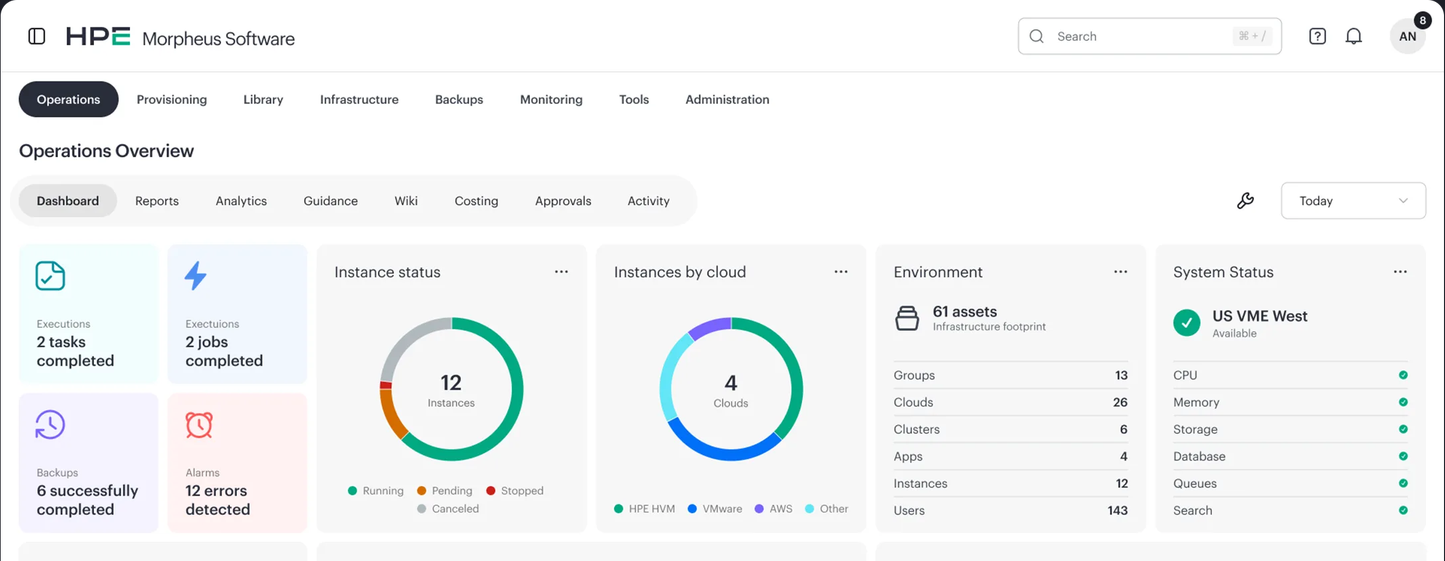
HPE definitely has some deep pockets, so they have a lot of reach in the enterprise. That alone I think makes it a strong contender as one of the best virtualization platforms in late 2026. But, at the same time, it is still younger than other choices like Hyper-V, Proxmox, or XCP-ng.
If you are already aligned with HPE, I see Mropheus VM Essentials as a platform with a lot of incentives and a lot of great features to go along with that. It isn’t a strong home lab contender I don’t think since there isn’t really a perpetually “free” version of it but you can get a free trial version that lasts 60 days and can be used in up to a 6 socket system.
6. Platform9 Private Cloud Director
This is one that I tested out and tried it out in the home lab. You can read my post and walkthrough here: Platform9 Community Edition Free Download and Install: Migrate from VMware. It is especially desiged for orgs that want to have their own private cloud feaures while having a good operational experience. Again, this is keeping in mind those coming off of VMware.
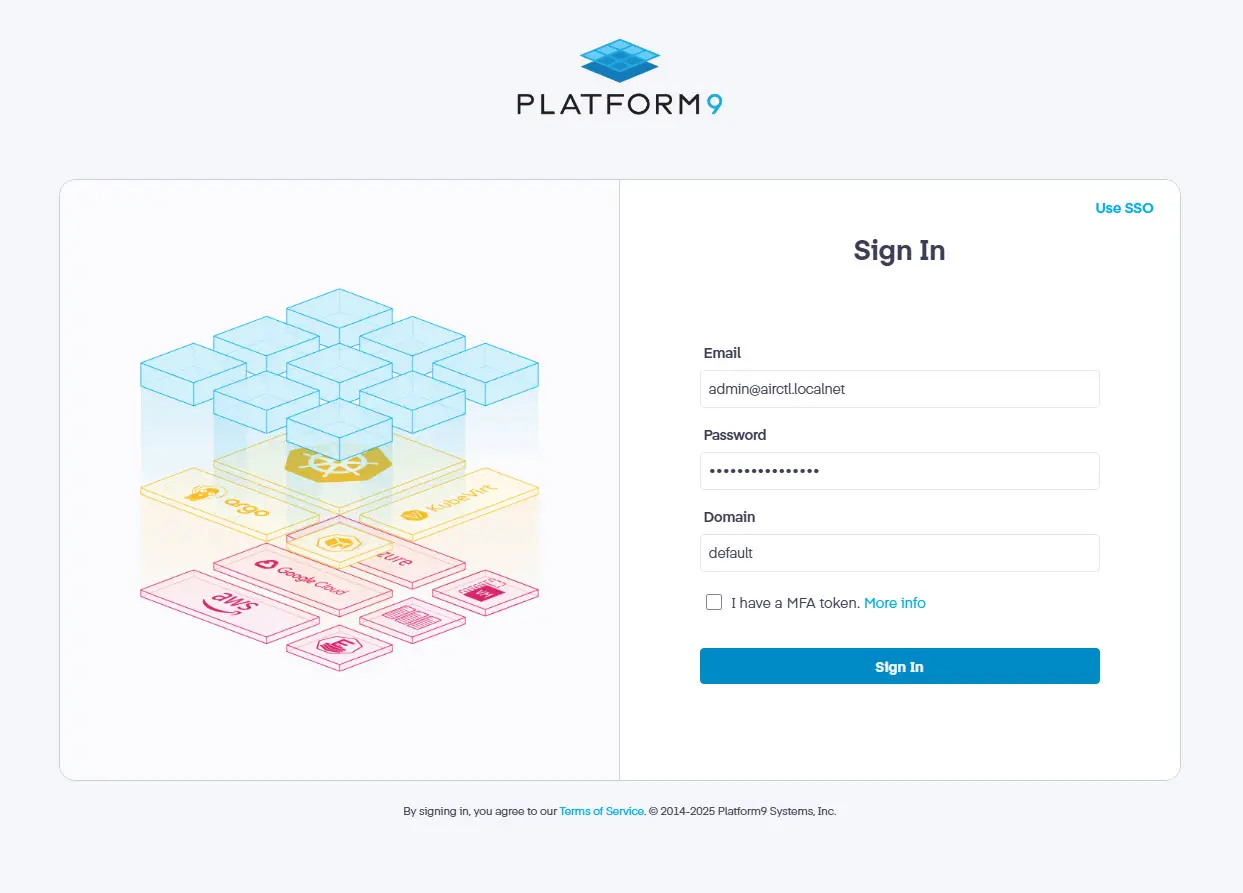
It supports all of the major features that I think most will be looking for in a home lab or production environment. You can do things like HA, live migration, DRS like features, multi-tenancy, etc. They do have a community edition for home labs.
They also have a free community-driven tool called vJailbreak. This is the tool you can use with them to migrate off of VMware. With it, you can use existing hardware so you can reuse your investment there without having to be forced to upgrade just to stay compatible with your hardware stack. It deserves a spot on the best hypervisors 2026 list.
7. VergeOS
VergeOS is another solution out there that you have probably seen marketed pretty heavily on Reddit and across various other platforms. The current release is 26.1.7 as of July 2026. VergeIO states that the latest release has faster disk repair operations, faster replication, inline deduplication, etc. It can run on existing server hardware.
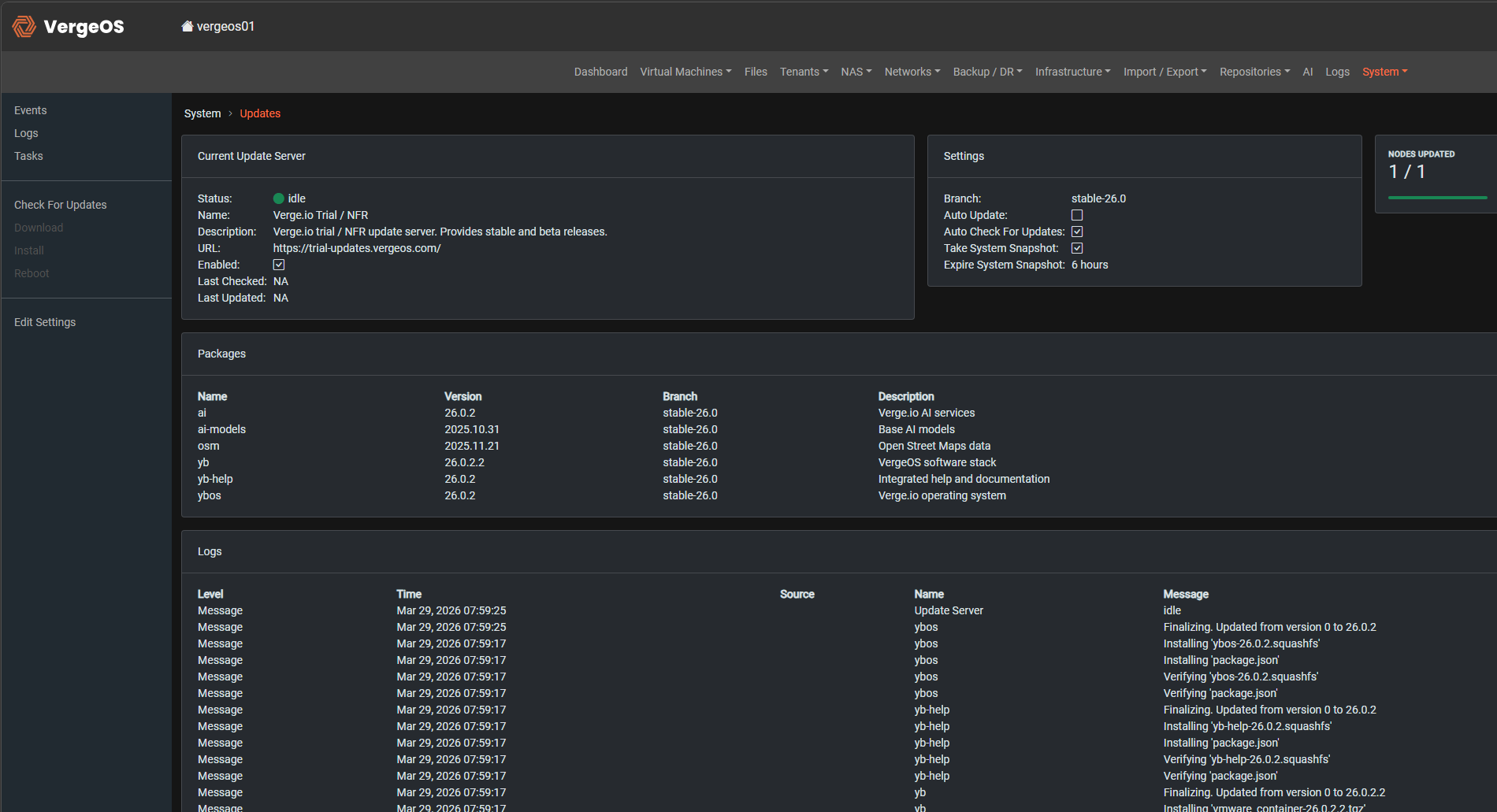
They are heavily targeting migrations from VMware and have geared their capabilities I think to capture a lot of this business if possible. It definitely seems like a viable alternative solution to VMware and has a lot of cool features. This is one that I am looking to take a spin in the lab for some hands on feed back.
One drawback here is that VergeOS is an HCI solution only. So you can’t connect it to your existing SAN solution or NAS in the home lab and take off. You have to implement their HCI solution. However, I think a best hypervisors 2026 list definitely includes this as a viable option.
8. VMware vSphere
I’m putting this on the list as I think VMware is still the most technically capable solutions on this list. We all know this. VMware is an excellent hypervisor and has tons of features that “just work”. However, I think the license hikes and appetite for VMware at this point shows that in 2026, most don’t think it is worth the 6-7x price hikes they are seeing. Hypervisors are now a commodity.
I think VMware will remain relevant for the foreseeable future in the largest of enterprise environments, but its influence will continue to diminish as fewer and fewer SMBs and even large enterprise environment use it and start migrating off as Broadcom squeezes what they can out of it. Also, Broadcom has made it so that many are being forced into upgrades and licensing solutions they don’t need like VCF. Gone are the days of putting together VMware licensing that works for “you”.
Wrapping up
Hopefully, my list of best hypervisors 2026 will give you an idea of what I am seeing as the true options out there that ones are actually going for. I think from what I see in my circles, Proxmox and Hyper-V are the two options that most seem to be deciding between when migrating from something like VMware. Other platforms have some great features like XCP-ng and solutions like HPE Morpheus have the advantage of being backed my HPE and the strengths that entails. How about you, what do you consider to be the best virtualization platform in your opinion as we move into late 2026? What are you running in your home lab or business?
More in this topic

Google is updating how articles are shown. Don’t miss our leading home lab and tech content, written by humans, by setting Virtualization Howto as a preferred source.
About The Author

Hi Brandon,
As someone who started using Proxmox VE back in the version 1.8 /1.9 days, I totally agree with it being your number one pick. Due to ease of use, I suspect our org will land on Proxmox with CEPH (possibly ZFS) for our VMWare migration.
That said, I’ve been wanting to dive into Kubernetes and so I’m much more interested in learning the ways of KubeVirt.
I’m still just getting my feet wet, but my current stack consists of Talos Linux, Cilium, Longhorn, Hyperconverged Cluster Operator (ie. KubeVirt, CDI, Multus, etc., deployed via Operator Lifecycle Manager (OLM)).
I’m now trying to get Forklift running so that I can test a VM migration. You’ve already touched on Radar from Skyhook and this has been an amazing tool for troubleshooting.
Once the cluster is set up, VMs could then be administered by Corral (https://github.com/tuna-os/corral). Corral offers a Web UI and TUI and works with multiple backends. Give it a test, I think you’re going to like it.
Jason,
This is great to hear someone with first hand experience moving into Kubevirt. I didn’t include it in the list simply due to the learning curve. But, this is an area I want to move in myself. I have been running my Talos Linux cluster since the beginning of the year and couldn’t be happier with it. It has been rock solid. I love your tech stack and appreciate you including that here as a blueprint. I definitely will check out Corral as well. Thank you for putting that one in front of me. Honestly haven’t heard of it until now. Thanks again Jason!
Brandon