


From the beginning of 2026, I have written a lot about my journey of moving away from VMware which you can read about here: I Spent a Year Running Proxmox and VMware Side by Side in My Home Lab. I spent years running VMware both professionally and in my home lab. However, the Broadcom acquisition accelerated the founded concerns many had. The worse has unfortunately come about, including licensing hikes, the less than desirable changes to VMUG advantage and just the change in energy around the product. The rest is history. Looking back now, I have learned several things along the way that actually have been genuinely surprising to me. Let me share those things with you.
Most virtualization platforms can now do the important basics
One of the perhaps biggest things that I have come to learn and realize since leaving VMware is that the gap between VMware and other platforms is not even close to what it used to be. For years, VMware had a massive technical advantage over everyone else. That, I think, was absolutely true. And, to some degree in the most advanced aspects, that is still true.
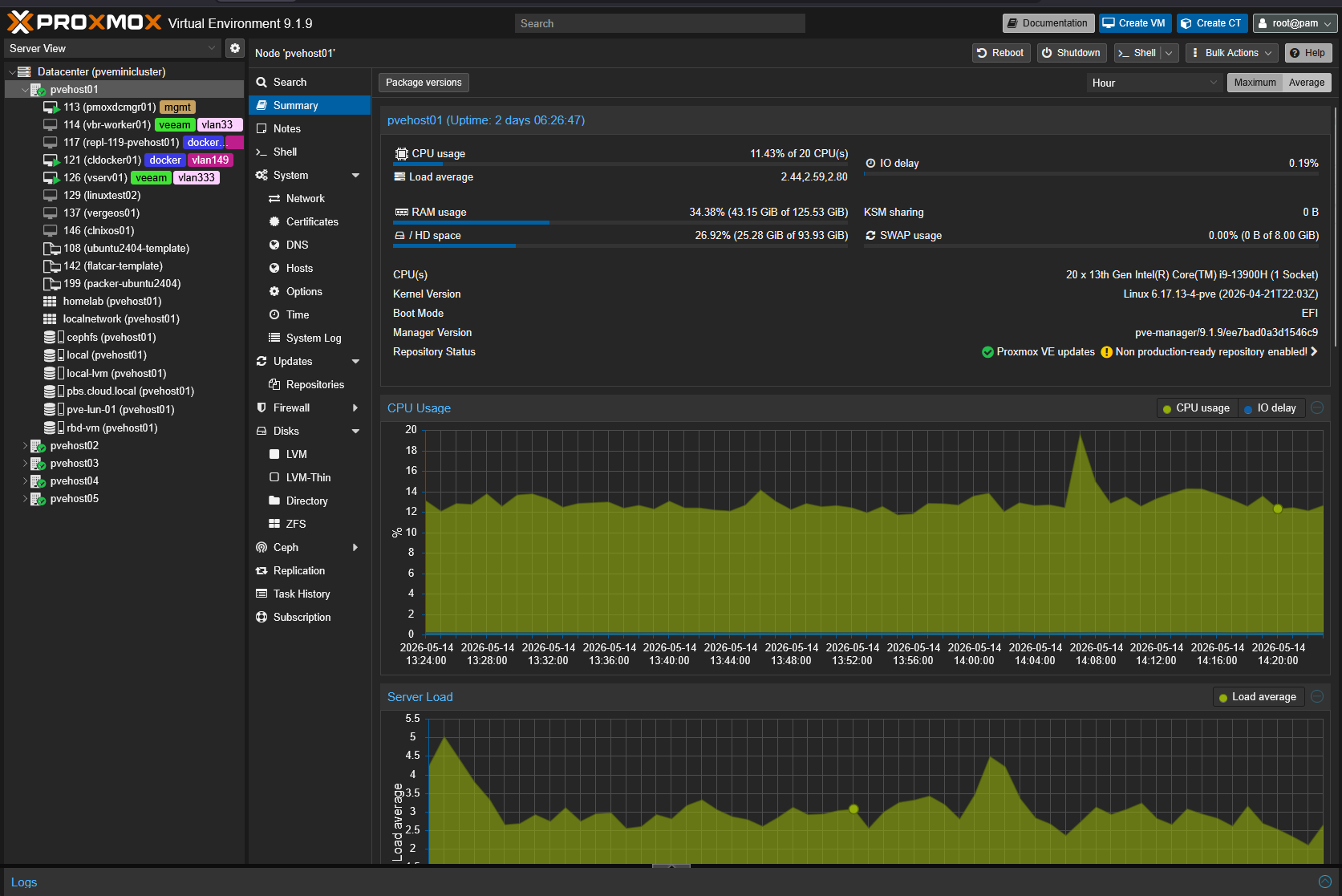
But the important thing is, most virtualization platforms can now handle the core features that most people ACTUALLY use day to day. What are those in my opinion? Things like these:
- Live migration
- High availability
- Snapshots
- Clustering
- Replication
- Backup integration
- Software-defined networking
- Shared storage
- Role-based access
- API automation
These are no longer VMware-exclusive capabilities. When I moved heavily into Proxmox, I realized I was still able to run production-grade clusters with redundancy, migration capabilities, backup workflows, and centralized management without feeling like I had stepped backward technically.
I remember thinking to myself, is this really running as well as I think it is? That was honestly one of the biggest surprises and when my thinking started to change. There are certainly still advanced enterprise features again where VMware remains extremely mature, especially in very large fortune 500 enterprise environments, but for a huge percentage of workloads in arguably MOST datacenters, other platforms have caught up dramatically.
For many, and I will, say arguably most customers out there, the difference between another hypervisor and VMware is negligible for what they want to accomplish and the workloads they are running.
Virtualization is no longer just about VMs
Another thing I realized after migrating away from VMware is that virtualization itself is no longer the center of infrastructure the way it once was. Ten years ago or more, everything revolved around virtual machines. Today, modern workloads revolve around containers, Docker, Kubernetes, APIs, automation pipelines, and cloud-native tools.
VMs are still incredibly important, but for a different purpose (being container hosts). I still run many virtual machines every day. But these service my containerized infrastructure.
Infrastructure in 2026 is much more about Kubernetes, cloud-native, lightweight services, immutable infrastructure, automation, CI/CD pipelines, infrastructure as code, AI, etc.
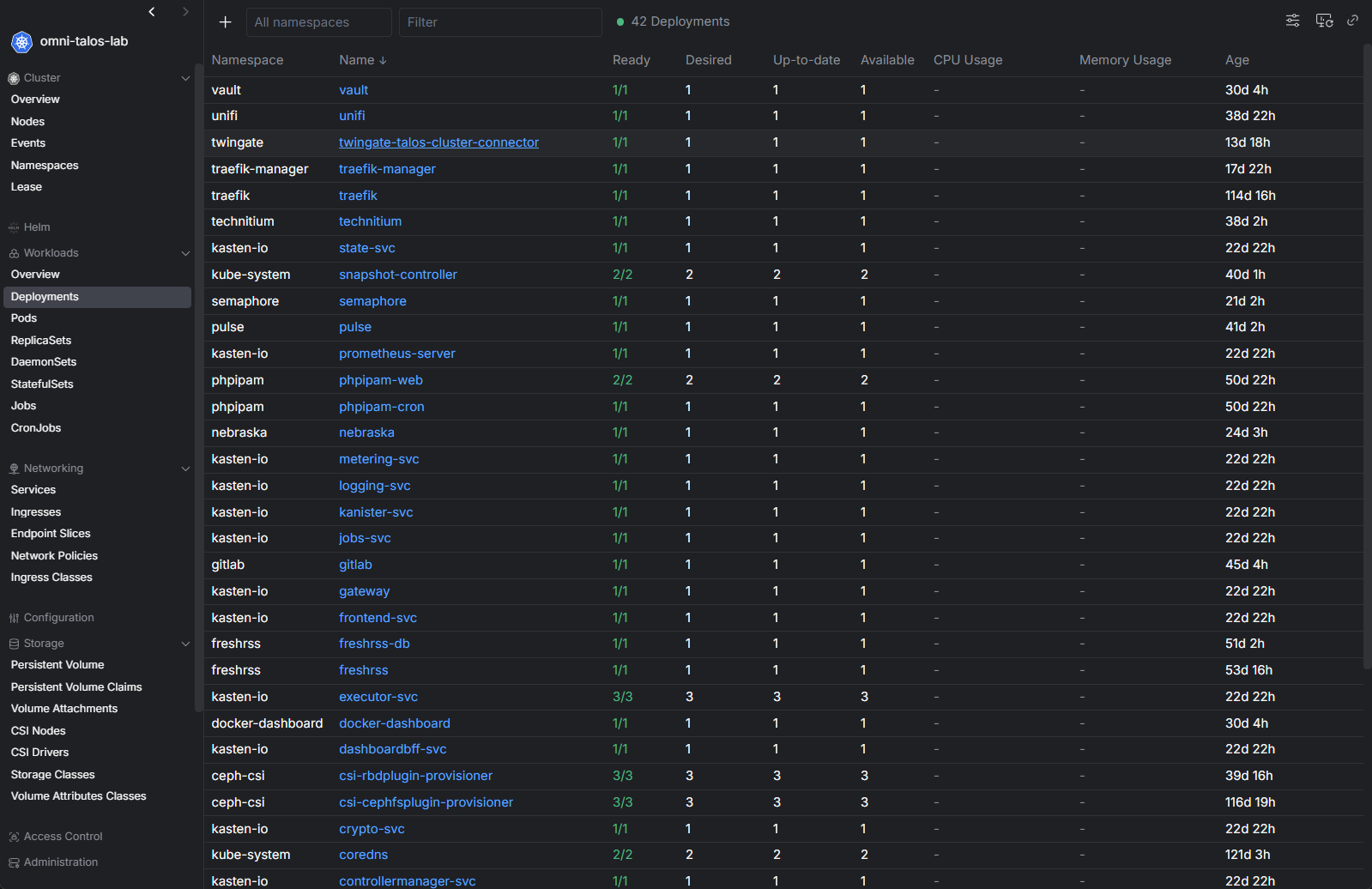
When it comes to containers, platforms like Proxmox feel actually more flexible for mixing modern workloads together. The native LXC containers included with Proxmox are incredibly flexible and resource efficient. And, Proxmox makes a great base for running Docker and Kubernetes workloads.
In my environment now, I regularly combine:
- Proxmox virtualization
- Kubernetes clusters
- Docker hosts
- Ceph storage
- AI workloads
- Lightweight Linux services
- Containerized applications
The environment feels more fluid and adaptable instead of centered around one heavyweight management ecosystem and being forced into a myriad of products and management overhead that you need basically an entire datacenter to run just the management plane. With today’s RAM prices, that is a waste.
That flexibility matters more now than I realized previously.
Excitement and community energy actually matter
This was one of the biggest surprises for me personally. For years, decades in fact, I feel like VMware was the exciting “thing” that everyone was talking about and wondering what new features would be arriving, etc. However, since Broadcom, that fervor has died out. Most community circles I am in the VMware talk is nonexistent. I have also seen posts where the VMworlds are also ghost towns compared to years past.
So, today, much of that energy feels diminished. I really think this is what led to VMware’s rise was the community enthusiasm. Because I think the enthusiasm creates a better product which is why we saw such great features introduced in vSphere. Now that enthusiasm is gone.
In contrast, the Proxmox ecosystem currently feels extremely active and energized. People are experimenting constantly. New integrations appear regularly. The community is building tools, dashboards, scripts, APIs, automation frameworks, monitoring stacks, and new deployment ideas almost daily.
Check out the Proxmox Reddit community here: Proxmox Linux.

I honestly underestimated how much this affects the day-to-day experience of running infrastructure. Infrastructure platforms are not just software products anymore. They are ecosystems. From my vantage point and the circles I am in, the energy around Proxmox, open source tooling, Kubernetes, containers, and software-defined infrastructure feels far more alive than what I currently see surrounding VMware.
You do not need vCenter Server to have a great experience
I think what a lot of us were dreading is having to move to another interface for management outside of the familiar vSphere Client linked up to vCenter Server. After moving away from VMware, I have realized that I am not as tied to vCenter Server and the vSphere Client as I thought.
In many ways, vCenter Server adds complexity to the management plane of VMware. You have to protect your vCenter Server at all costs. This houses so much of the important management information about your cluster and enables all the enterprise features.
I actually like the way Proxmox does things here. The management plane is part of the cluster, not part of an appliance that must be protected. This makes that management information much more a part of the cluster itself and not contained in an appliance.
Proxmox feels more like Kubernetes in the sense that the state information in regards to management and the control plane is part of the cluster. Proxmox gives you clustering, centralized management, migrations, storage management, backups, and node administration directly through the platform without needing an entirely separate management stack like vCenter Server. That simplicity has been refreshing.
My environment now feels:
- Lighter
- Faster
- Easier to troubleshoot
- Easier to back up
- Easier to rebuild
- Easier to automate
I also appreciate how transparent the platform feels. Configuration files are visible. Networking is Linux-based. Storage integration feels straightforward. APIs are easy to work with. Automation feels natural. There is less abstraction hiding what the platform is doing behind the scenes.
That has made troubleshooting much easier compared to some of the complexity that accumulated over the years inside VMware environments. If you do want a very vCenter-like appliance and interface frontend for your Proxmox environment, I highly suggest PegaProx for that purpose. I have written a lot of content around it. Check out my blogs on PegaProx here:
- PegaProx Now Adds Built-In ESXi Migration and Proxmox Backup Monitoring
- Managing Multiple Proxmox Clusters Gets Messy When You Want Smarter Placement
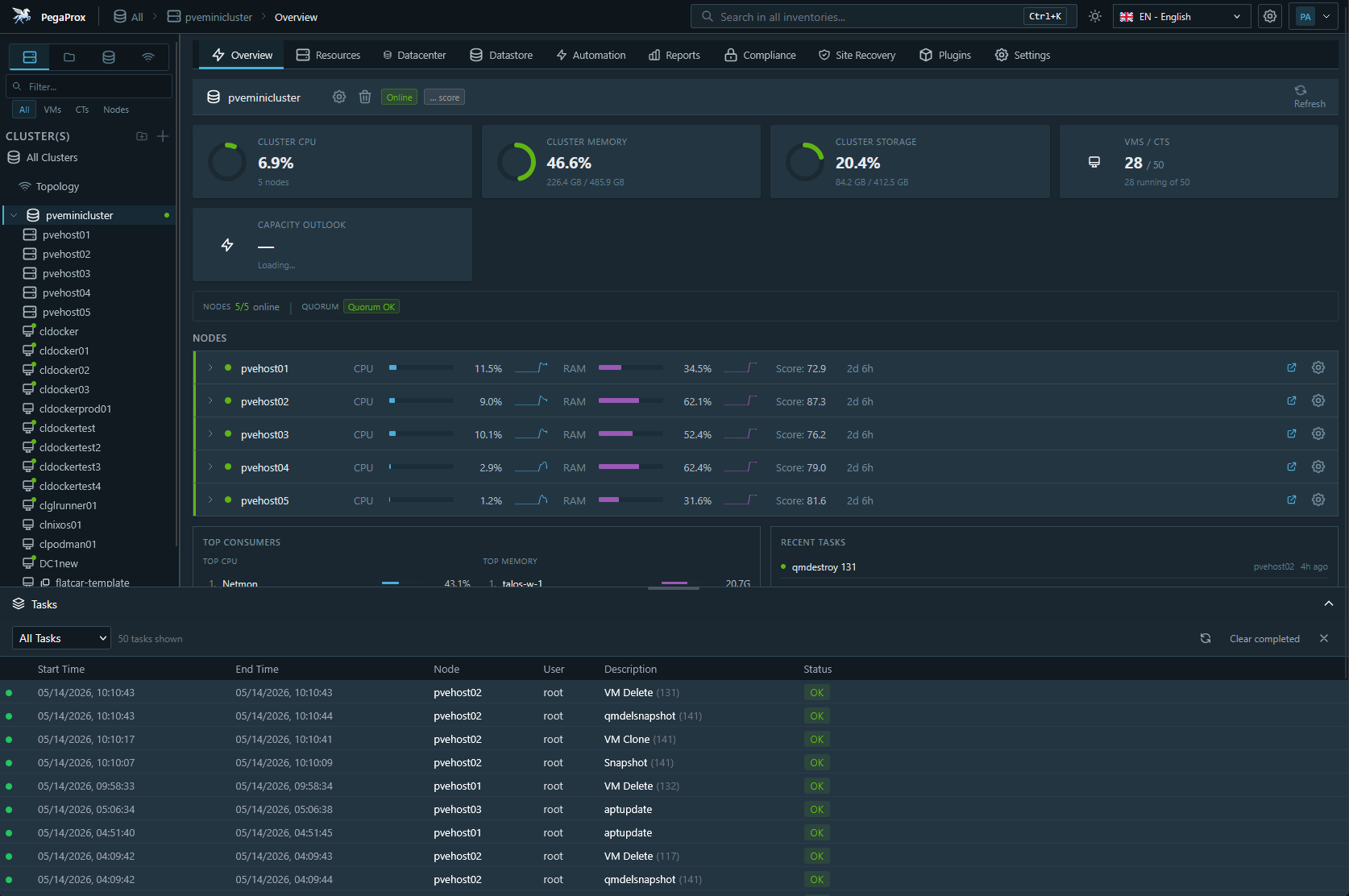
Ceph is an incredible vSAN alternative
I’ll be honest, when I started looking at getting off VMware vSphere and vSAN, I looked into Ceph for use with Proxmox and it scared me a little bit as it was definitely an unknown to me at the time. But, since playing around with it and now running it as my main cluster storage in the home lab, I can tell you it has gained my trust from real-world use and experience with it.
Ceph is super powerful once you understand the concepts that go along with it and today I use it for:
- VM storage
- Kubernetes persistent storage
- Shared storage
- Replication
- High availability workloads
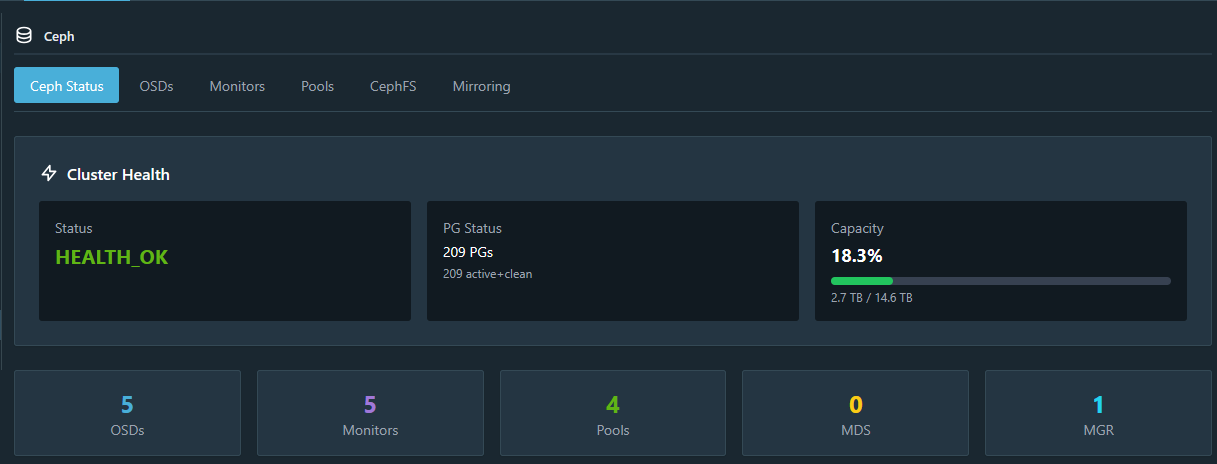
What impressed me most is how flexible Ceph is. I can scale it independently. I can mix storage types. I can use both block and file storage. I can tune replication models. I can build highly available storage using commodity hardware instead of requiring highly specific compatibility lists. Now, don’t get me wrong, there are definitely right and wrong ways to do Ceph, but it is actually pretty forgiving as a platform in terms of its resilience. The major difference for me is that Ceph feels open and adaptable instead of tightly controlled inside a single vendor ecosystem.
I also like that the Proxmox and Ceph integration has become extremely mature. In many ways, Ceph feels like the future direction of software-defined storage for open infrastructure environments.
Proxmox works better with modern mini PC hardware
This has also been a huge win in my home lab. I used to have to really pick and choose which mini PCs would be good choices for the home lab since VMware ESXi is not compatible with Realtek network adapters. These Realtek network adapters are super common for 2.5 GbE adapters and 1 GbE adapters alike. So, finding mini PC options that would be supported from a network perspective for VMware was tough to say the least.
Since moving to Proxmox, I no longer have to worry about this. Proxmox has generally worked extremely well on modern mini PC hardware because it benefits from the broader Linux ecosystem underneath. That has allowed me to build much denser and more power-efficient infrastructure using smaller systems without constantly fighting hardware compatibility problems.
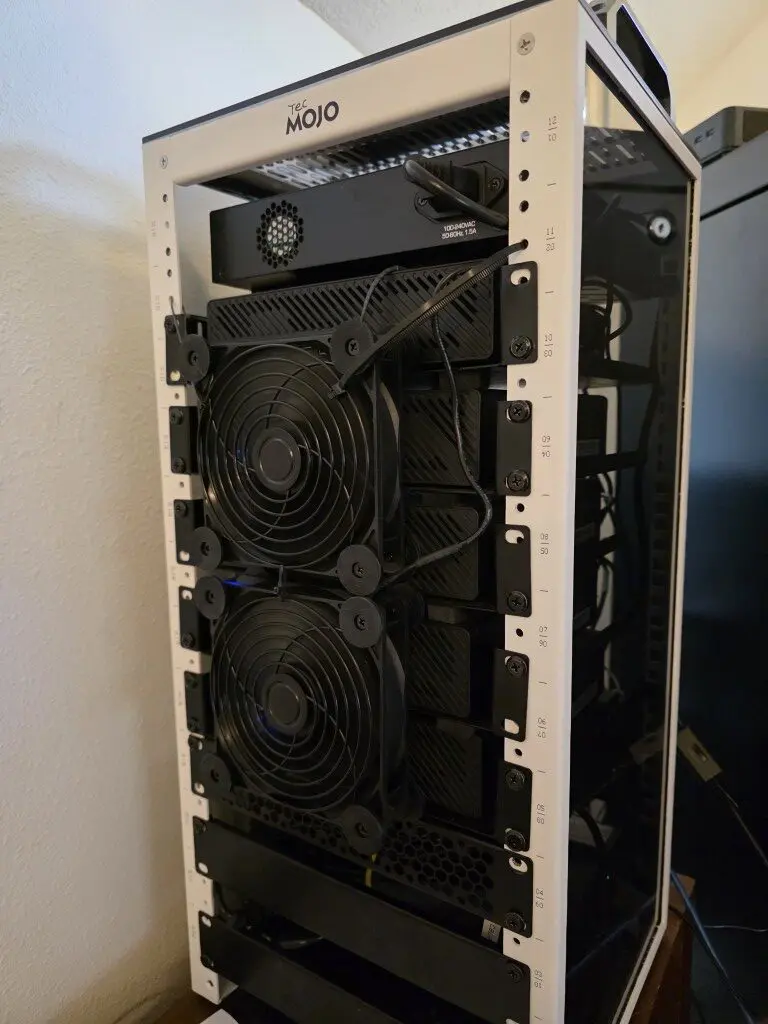
Now, I am currently running on (5) Minisforum MS-01’s, which actually are compatible with VMware and what I was running my cluster on before switching it to Proxmox. Instead of large enterprise servers pulling huge amounts of power, I now run compact clustered mini PCs and I really couldn’t be more pleased with my current setup. And, there is a LOT less heat buildup from my current setup compared to a few years back.
Enterprise-ready no longer means VMware-only
For years, when you thought “enterprise-ready” most thought VMware. Period. I no longer think that is true. Today, there are multiple platforms capable of running serious production workloads reliably.
That includes:
- Proxmox
- Kubernetes
- Ceph
- Open source networking platforms
- Modern backup solutions
- Open observability stacks
- Container orchestration systems
The ecosystem has matured enormously. So I think one of the biggest things I have learned after fully migrating away from VMware is that enterprise-grade infrastructure is now much more about architecture, automation, redundancy, monitoring, and operational workflows and not about a single vendor.
Wrapping up
If you would have said to me 10 years ago, you would be migrating off VMware for your home lab and most enterprise environments around the world would be as well, I would have said you were crazy. However, fast forward to 2026, and this is where we are post Broadcom. Now that I have moved on, what has surprised me the most is not that alternatives exist. It is how mature, capable, and production-ready many of those alternatives have become.
VMware still has strengths and I think it will always be around. There are still environments where it makes sense. But for most, it is no longer the only serious option that many of us thought of it as years ago. Honestly, rebuilding my environment around open infrastructure, Proxmox, Ceph, containers, and modern automation tooling has made running my home lab more enjoyable again. This may be the biggest lesson of all. What about you? I would love to hear yo
More in this topic


Google is updating how articles are shown. Don’t miss our leading home lab and tech content, written by humans, by setting Virtualization Howto as a preferred source.
About The Author

I still run VMware Workstation. It is now installed directly on my Zorin 18.1 PC (Dell Optiplex SFF), I run Windows 11 as a VM on Workstation for things I need from Windows and related Windows only software, like Snagit, OneNote (although I am migrating from OneNote to Joplin), also use the Brother P-touch Editor to make labels on on my PT-2700 label maker printer. Also H&R Block tax software is a must have.
Like you, I worked as a System Engineer for the past 20+ years, mostly with VMware and Windows. At one point My home lab had 11 Dell Rack mount Servers (I snagged them from my employer when they switched over to Nutanix.
Randy,
Great notes here. I have been playing around with Zorin as well. Is this your daily driver other than the software you noted? Very cool to see ones switching to Linux. So far, has the business been pleased switching to Nutanix? I have heard many who have had issues with the renewal pricing with Nutanix being super expensive as well.
Brandon
I’d also recommend checking out Morpheus as an alternative to proxmox. It is definitely an enterprise grade solution.