


I recently had a comment on a blog post that stopped me in my tracks. It was a comment from a reader that made me stop and think about the future. It touched a nerve that I think all of us have been quietly thinking with events over the past couple of years now. The sentiment was blunt. Hardware prices are rising. RAM feels like it is grossly hard to justify at today’s prices. NVMe storage is no longer just a casual upgrade. The fun of continually improving our labs with small component upgrades here and there has been replaced by hesitation and sticker shock in many cases. The conclusion was direct, maybe it was time to sell off the lab entirely. That single comment turned into a question in my mind. Are home labs dead in 2026? This post is an honest look at where I think things are honestly. Some things feel broken and others still work. This is where I think things are headed.
Why this question feels different in 2026
Discussion the value and worth of running a home lab and deciding if the cost is worth it, is not new. I think we have always talked about things like power draw, used enterprise gear and making do with the last generation of hardware. However, things do feel different now. I think the reason for this is that the friction and where and why things are hitting our pocketbooks is happening across multiple fronts.
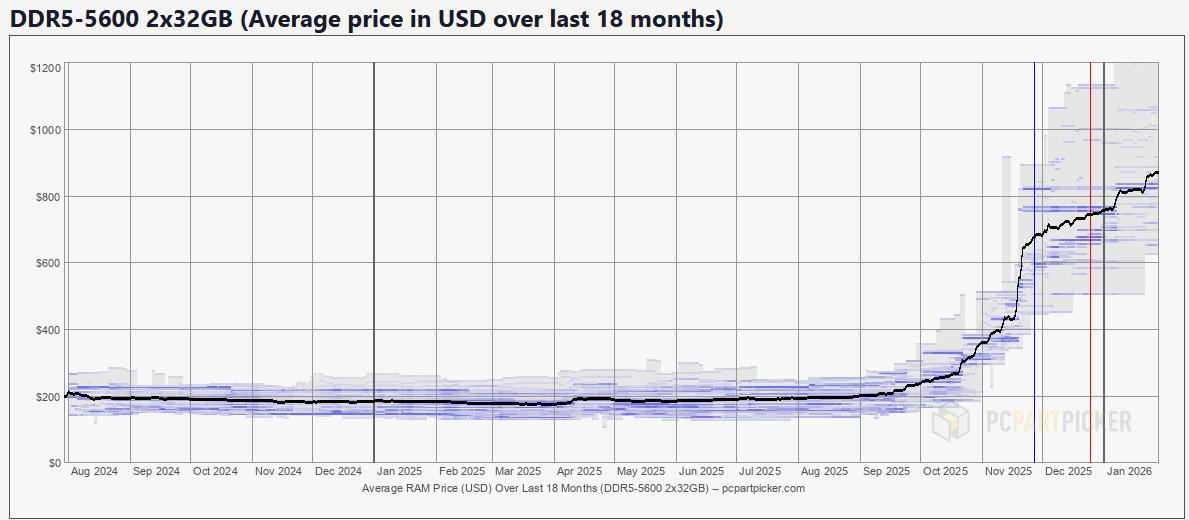
If you have seen RAM pricing it has become absolutely ridiculous. And, what is different this time compared to in years past, whereas the price inflations may resolve within a year, we are hearing that RAM prices won’t recover in some estimates until 2028 or beyond. This is crazy to think about. NVMe drives are starting to feel the price increases as well.
Below is a graph from PCPartPicker:
Power costs have always been a consideration, but is even more of a consideration now than ever before. Electricity costs don’t seem to go down but rather go up like everything else. Used enterprise hardware used to be a great equalizer as it was cheap and plentiful, but power consumption greatly offsets any benefit to running an enterprise server, even if you get a good deal on used hardware.
I don’t think any of these things alone would be enough to kill the hobby. But I think the current state of affairs is enough to have a sense that the old upgrade path no longer exists. You can’t just add more memory this year or add another NVMe drive next year without doing the math for your upgrade.
The emotional side we do not talk about enough
For most of us, home labs fill a lot of different roles. Not only are they learning environments, they are creative outlets for us. They are places that turns our curiosities and experiments into real-world skills. Also, most of us I think view this as a hobby. Hobbies are things we enjoy and spend free time in. When the rising costs we are seeing make these environments feel out of reach, it feels like losing more than just hardware. There is an emotional aspect to this.
When you have invested years into building something and suddenly feel priced out of continuing it, the question becomes personal. Am I still a home labber if my setup stops growing? Does downsizing mean giving up? Those are obviously not technical questions. They are emotional ones and these are important to us too.
The myth about home lab upgrades
I do think that there is a fallacy in our thinking when it comes to how we gauge whether or not our home lab environment is successful or not. I think we have long tied the thoughts of more nodes, drives, memory, and other hardware is synonymous with progress in our lab environments.
I think when it comes down to it, our home labs are really overbuilt as they stand any way. That in itself doesn’t mean they are built in the wrong way. Experimentation with equipment we don’t need is part of the fun and honestly how we really dig in and learn. But it does mean that rising costs are going to force an honest inventory of what we actually need to deliver learning value.
I will say this that a smaller lab though can sometimes help us to deeply understand what is going on than a super large sprawling lab with lots of equipment that we don’t need. When you have constraints due to anything really, including costs, it has a way of making us design things better I think. The old adage of “throwing hardware” at a problem can happen even in the home lab. By designing smaller and with known constraints, it helps us master this for production. I have yet to be in a production environment yet, where there are no constraints in some form or fashion.
Downsizing versus intentional design
There are two ways to downsize. You can downsize out of frustration, or you can downside with a mindset of redesigning your infrastructure base on intent. If you have to sell off gear because it no longer feels sustainable, this may feel like failure. However, if you need to redesign your home lab with downsizing as part of that, if you do it as part of a redesign, this can actually feel like growth in what we are accomplishing.
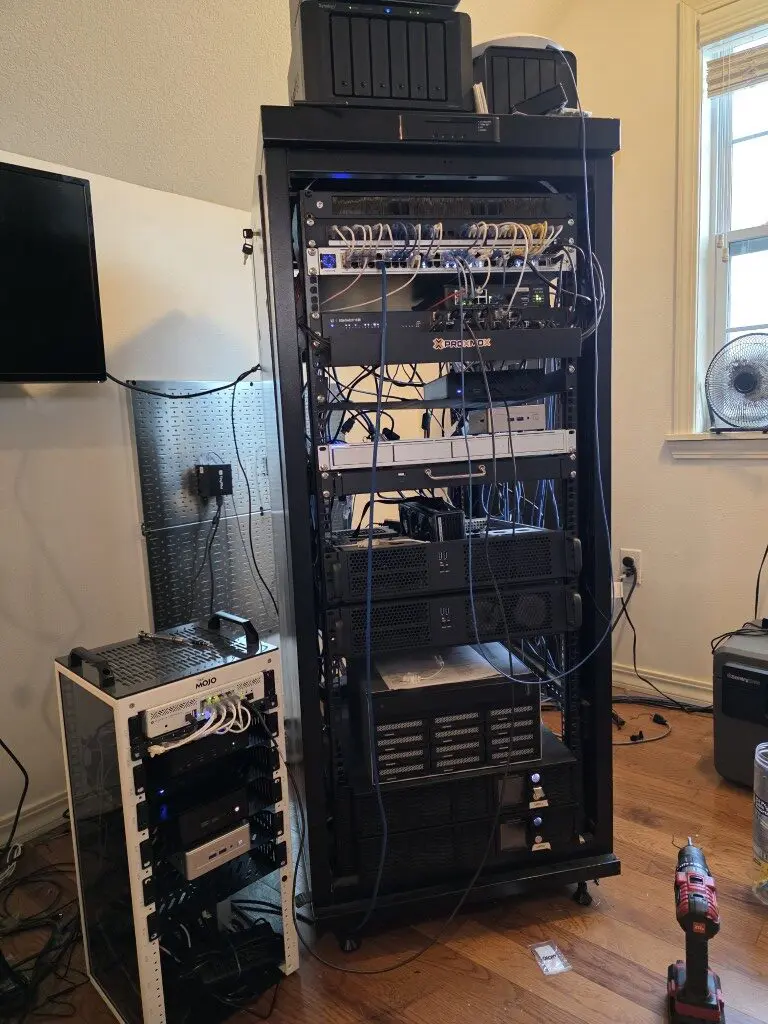
In my own environment, I have felt this shift. I am now running smaller nodes and many more microservices than VMs. More thought needs to go into what truly needs to be running vs what I spin up on demand. I have much less emphasis on raw capacity vs observability, automation, and making things reliable.
However, again, I think this is “more” instead of “less” in terms of learning and the real value our labs can give back to us when we approach things this way.
The hybrid home lab?
I think what we are seeing across the industry is going to lead to a stronger hybrid approach to things. I am doing this more often than I used to do – locally hosting things that make sense, but hosting other things in the cloud. I created a blog post and video on this topic that seemed to hit a nerve with the community. Check that out here:
In my opinion, and some may disagree with this, it is not abandoning the home lab. It is extending it. We have access to cheap cloud credits, small VPS instances, and on demand compute that can allow experimentation without permanent hardware commitments. They let people keep learning even when physical upgrades might be on pause due to the price of new hardware.
As an example, if you want to learn about AI and don’t want to invest in inexpensive AI gear like a powerful video card and fast CPU and lots of memory, rent this in the cloud instead.
No matter what, my focus on certain skillsets stays the same. These are infrastructure as code, automation, networking, observability, and security. Even though our home lab environment shifts, this doesn’t have to pause our learning or slow us down.
Why the home lab is still a unique learning tool that has no equal
I think despite all of the uncertainty around hardware pricing and other factors, there are things that you learn in a home lab that nothing else can replace, including online classes, reading, watching videos, and other types of learning.
Also, with a home lab, you can destroy or break things without losing your job in a production environment or breaking things you don’t want to break in your normal home network. It is like a playground for learning.

The beauty with a home lab is that it can be as small as you want it to be. Even a single mini PC is a great way to get started learning. You can load Proxmox and then start loading up virtual machines to emulate different types of environments.
Really, the constraints we have already talked about is a mirror of typically what we run into with production environments. Usually there is not unlimited hardware budgets. We have to learn to do more with less. So the new situation on the hardware front I think is causing us to think more like we would in a production environment.
Are people leaving the home lab hobby in 2026?
I think like all changes we see across the board, it will cause some to reconsider running one and leave. There is no shame in this, if this is just not for you or your budget. This is unavoidable I think overall. For some, the cost of keeping and maintaining a home lab may be too much to justify it, even with the tremendous learning opportunities.
However, I don’t think that means that home lab is dead. It does mean the audience may be shifting and there are hurdles along the way. Every hobby goes through cycles like this. There are times of accessibility followed by consolidation. The people that decide to stay and keep plugging away are usually the ones that redefine what the hobby means to them personally and see a benefit to themselves personally. They enjoy it.
What I think the outcome will be
Obviously, I can’t tell the future with crystal clarity. But I don’t think that home labs are disappearing. I for one am definitely keeping mine and looking forward to my more intentional builds. I do think that most home labs will become, like mine, more intentional, more software-driven, and hybrid possibly in nature. We will decide that maybe some services aren’t worth self-hosting when someone else can do it.
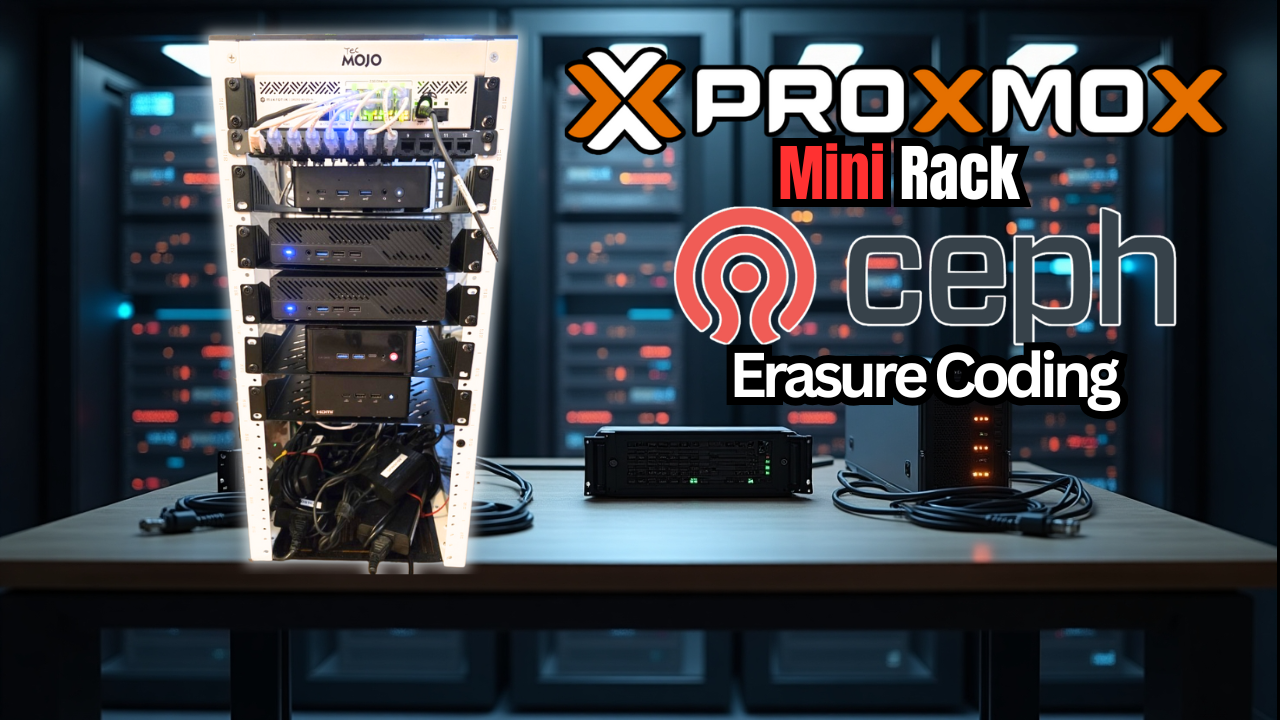
Check out my post here on my new Proxmox mini rack build with Ceph erasure coding for storage:
I do not believe home labs disappear after this moment. I believe they become more intentional, more software driven, and more diverse in form. I think more mini labs are in store as well.
Wrapping up
I think possibly the better question is not are home labs dead in 2026? But, I think maybe it is whether or not the version of the home lab we have been used to all these years has been sustainable to begin with. If rising costs force us to build smarter and leaner, I believe this will lead to a stronger community and help us all become smarter engineers and architects with the new constraints that we have. What about you? Do you think home labs are dying? Are you scaling down your home lab or going big? Let me know in the comments. Interested to see how the current market is affecting everyone’s decisions.

Google is updating how articles are shown. Don’t miss our leading home lab and tech content, written by humans, by setting Virtualization Howto as a preferred source.
About The Author


I think there’s a great amount of excellent hardware out there. Companies are very often forced to replace hardware because it’s no longer under maintenance. So I actually believe refurbished hardware will be used a lot in the near future, and that’s not a bad thing
Giuseppe,
I think you are right on this front. I am hoping too that we will see the AI bubble burst at some point in the near future and there will be a correction in the market and consumer hardware. Time will tell, but I do think refurbished gear is definitely going to have a strong showing now that new components are outrageously expensive.
Brandon
Perhaps more people will be in the position where I have been, squeezing money for some part out of the family budget every other year and repurposing machines that are no longer usable as desktop. But now when the situation is so much worse, I hope my single server under the staircase keeps working because I may not be able to get another. I do my backups to an old HDD that I keep in the closet between backups to be safe. The next expense may be a new one, but of course the market senses my intentions and raises the price accordingly.