


If you have been running containers in your home lab or small production environment, there is a good chance you have tried or are currently using Docker Swarm. Swarm has always been one of the easiest ways to get started with container orchestration. And, I have told people who have asked me about Swarm, that it is a great middle ground between a standalone Docker host and running a Kubernetes cluster. You basically install docker, initialize a Docker Swarm cluster, and then you are off to the races with a very familiar workflow if you have used Docker compose. But in 2026, the conversation around Docker Swarm feels a bit different. Let’s take a look at Docker Swarm vs Kubernetes 2026 and see why there are some good reasons to take a look at your environment and where it is headed.
Latest updates with Docker v29 have introduced problems with Swarm
Docker Swarm has had its fair share of problems lately. The update to Docker 29+ caused many issues with Docker Swarm clusters. Note the following that have happened throughout this past year:
- When Docker released v29 of the engine, it required a minimum API version of 1.44. This caused issues with older docker clients, management tools, and script that were built against the older API versions,. This caused many of these to have failures communicating with the updated daemon.
- There have also been many reports of networking issues. Users have reported broken internal DNS resolution after initializing a swarm cluster with version 29. These have been noted to resolve after leaving the swarm. Other networking issues cropped up with some reporting “gateway timeout” errors.
- Another breaking change has been that legacy volume plugins in Docker Swarm environments can lose storage access. Portainer posted a technical advisory on this topic. This makes data appear unavailable even when it is there in the storage system. Especially with plugins that connect storage to Swarm via (iSCSI, NFS, etc).
- Policy routing issues have been linked to specific network configs and policy routing on certain Linux distributions.
I think for many, the question is no longer whether Swarm works. The question is whether it is still a safe investment of your time and infrastructure moving forward from 2026 onward. I have been wondering a lot about Swarm and its future with recent developments and issues that have cropped up. I have been running it for the past 2 years or so.
If you want to check out how I run Docker Swarm, and why it may be the perfect “in between” a single standalone host and a full Kubernetes cluster:
- How I Deployed a Self-Hosting Stack with Docker Swarm & MicroCeph
- Docker Swarm is Awesome with Portainer
You can also check out the video I did on this one:
Why this question I think matters more now
In the past discussions of comparing Docker Swarm vs Kubernetes, it was mostly about simplicity versus the complexity of Kubernetes. You can check out my blog post where I detailed some of the major differences in the two for the home lab here: Docker Swarm vs Kubernetes: Home Lab Comparison. Swarm has been the easy option to gain container orchestration. Kubernetes was the powerful option but came with a super steep learning curve and complexity galore.
With recent developments with the API and other issues that have cropped up, the conversation feels like it has shifted. It is not JUST about the features. It is having confidence in the platform. When you build out a home lab you are not just learning the tools. You are taking your time to invest in learning a technology, and potentially using that technology in production environments that you work in.
I think if a platform is no longer evolving at a pace that meets with what ones think about for production environments, this can become a real factor in the decision to go a different direction. This is why I think the question of whether Docker Swarm is still safe to use in 2026 is worth asking.
What has changed with Docker Swarm lately?
Not much. When we think about it, Docker Swarm hasn’t really seen any major features introduced in quite a long time. It still has the same core capabilities that it has had.
Note the following core features:
- Cluster management with manager and worker nodes
- Service-based deployments
- Built-in load balancing
- Rolling updates
- Secrets and configs
All of that still works and works well. There just has not been meaningful innovation in Swarm compared to Kubernetes. While the rest of the container ecosystem has moved forward pretty rapidly, Docker Swarm has very much stayed where it was.
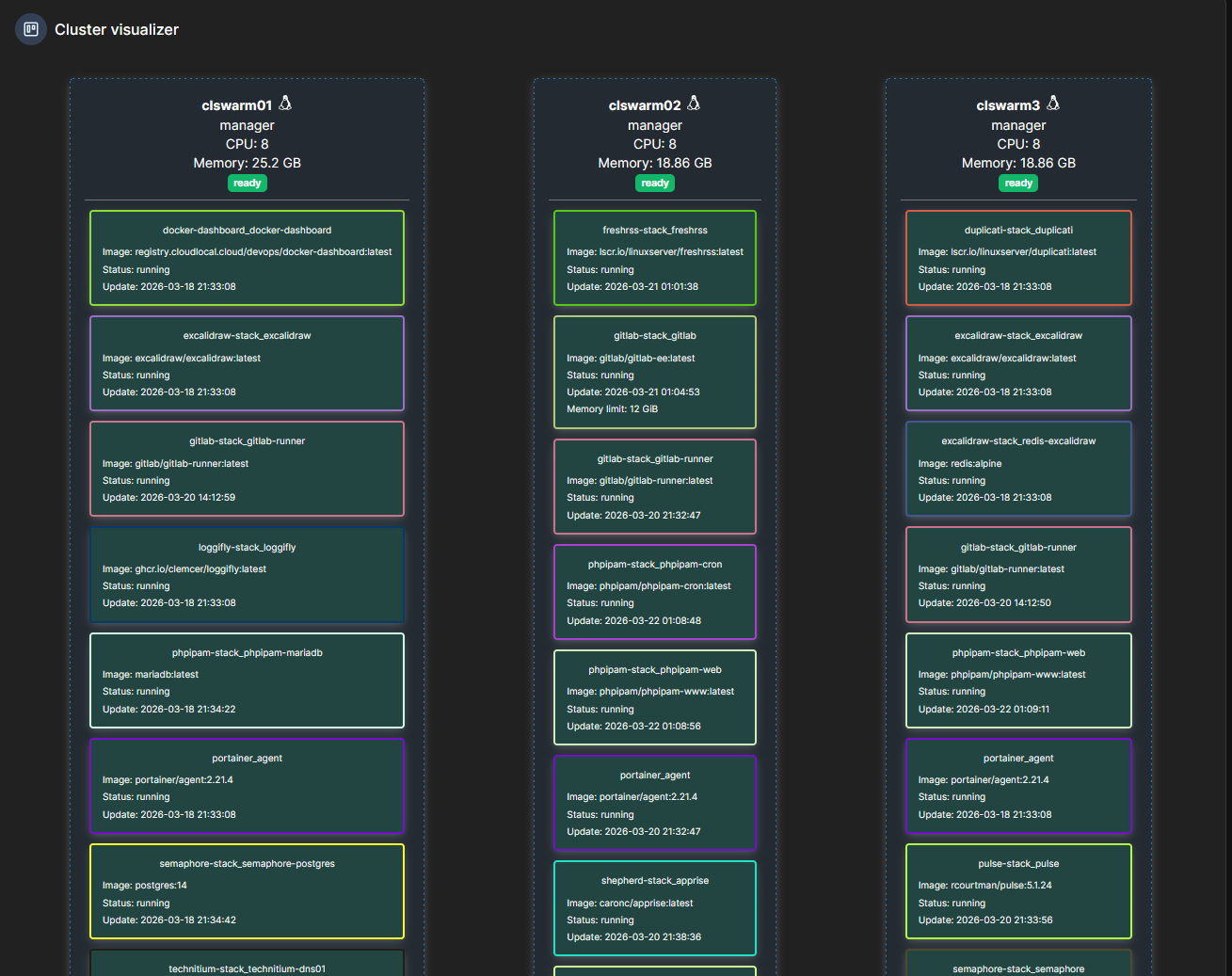
On the other side of the coin, this isn’t a bad thing necessarily. Stable and predictable and well-known features can be a definite good thing. But it starts to be concerning if the surrounding ecosystem is evolving and changing, but the platform you are on isn’t really.
I kind of liken this as well to VMware vSphere. It has a well known feature set and capabilities that we have all come to know and learn very well over the years. But due to different reasons than Swarm, vSphere and the ecosystem around it has become stagnant due to Broadcom. We are seeing the major shift because of that fact to other solutions.
Docker Swarm pros and cons
Even with the hiccups lately with Swarm since the latest engine release, Docker Swarm still has real strengths in the home lab and certain production environments. In many ways, it is probably the fastest ways to get a cluster up and running. here are just a few of the pros and cons of running Docker Swarm:
| Pros (why swarm still works) | Cons (what to consider in 2026) |
|---|---|
| Simple cluster setup with not very much overhead | Uncertain future development after 2030 especially |
| Compose workflow that is easy to learn and already know for most | Dependent on Docker Engine direction |
| Lightweight and ideal for mini PC labs | Most innovation is happening in Kubernetes |
| Solid for static apps and internal services | Limited growth |
| Quick to deploy without complicated tooling | Less in tune with industry trends |
Kubernetes pros and cons
Kubernetes is still currently the defacto standard in running container orchestration at scale. That probably isn’t going to change any time soon. Note the following pros and cons of running Kubernetes in 2026.
| Pros (why kubernetes stands out) | Cons (2026 reality) |
|---|---|
| Huge ecosystem with tools like Helm and GitOps | Requires more time to learn and operate |
| Advanced orchestration and scaling capabilities | Setup and maintenance are more complex |
| Native support for modern storage and networking | Needs more CPU, memory, and infrastructure |
| Designed for large, distributed environments | Debugging can be more involved |
| Strong future backed by industry adoption | Overkill for very simple workloads |
Either of these will pair really nicely with your Swarm table and give readers a quick, high-value com
Mirantis owns Docker’s Enterprise business now
In case you haven’t kept up on this front, Docker sold its enterprise business to Mirantis in 2019. This did change the future of Swarm in a few ways. Docker said that it wanted to focus on developer tooling. Mirantis took over the enterprise customer base, support contracts, and platform capabilities. Swarm remained as part of the Docker Engine project. Mirantis again is the one supporting it.
Mirantis has continued support for Swarm for enterprise customers and committed to supporting it through 2030. So, this at least does give us a signal that it is planned as a supported business product at least through the 2030 timeframe. But what about after that? It will be interesting to see what Mirantis decides to do with the support of Swarm after this support commitment.
My take for home lab builders
In my own home lab, I have found that Kubernetes fits better with where things are headed I think. Especially when you want to start looking into advanced storaged, automation pipelines, and more advanced networking, Kubernetes just has way more features and flexibility in these areas. I am leaning more into GitOps as well and this is also better supported with Kubernetes tooling, like ArgoCD and Flux, etc. That still said, I still appreciate how easy Swarm is to work with and does the job.
So if you already have Swarm, keep it. But, start also leaning into Kubernetes, as this was probably your goal anyway. Then take it a step at a time on how you progress with your environment.
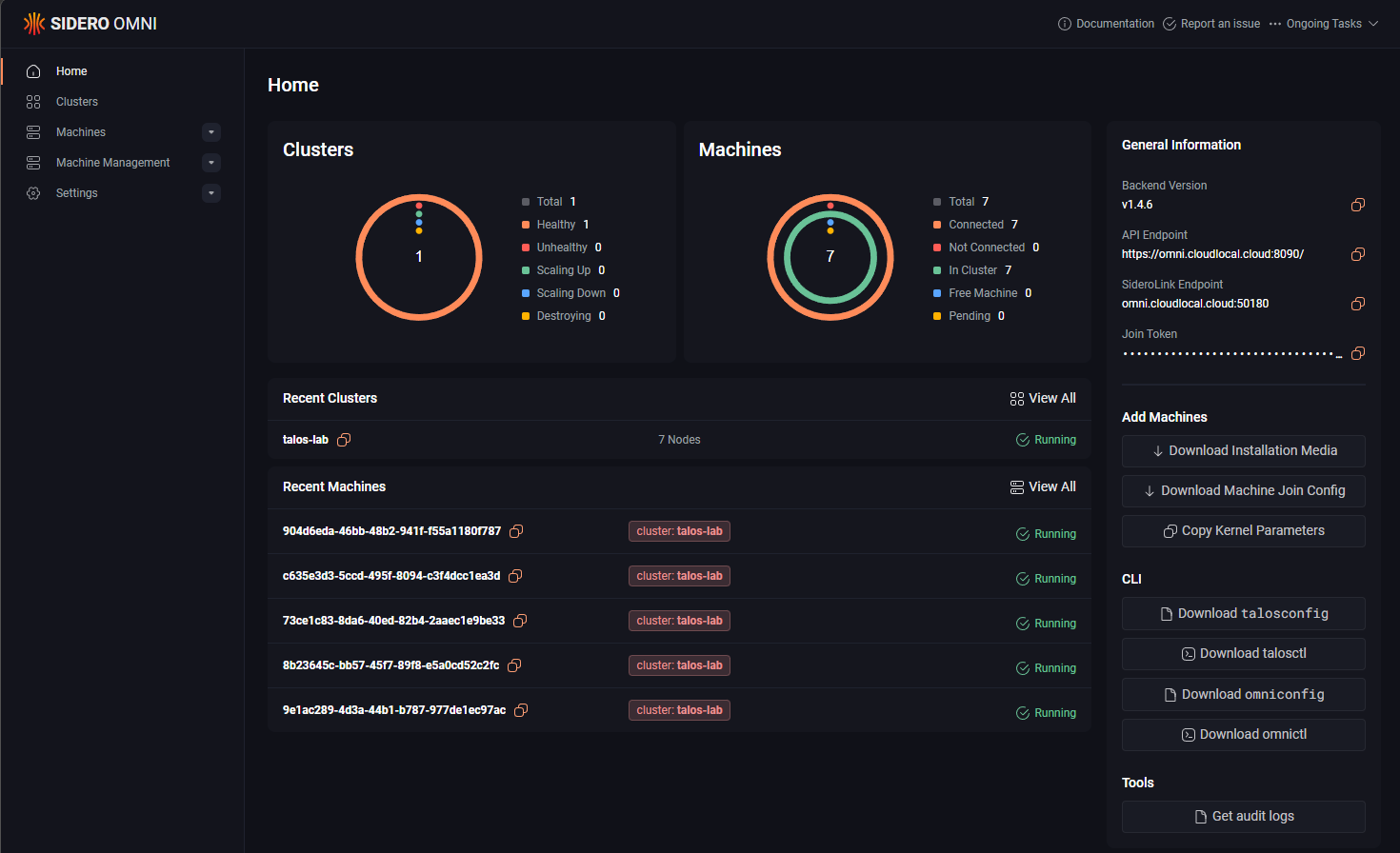
What Kubernetes platform am I using in the home lab in 2026? I have gone with Talos Linux Kubernetes this go around with Omni management. Check out my blogs here:
Should you move off swarm?
I think this is probably the biggest question and may depend really on your current situation and how you are running your containers. If you already have everything running in Swarm and things are stable for you, there isn’t a need to panic and probably not an immediate reason to start thinking about migrating, unless you are running into other limits.
This may also depend on what type of storage you are running, etc. Ones that were bitten by the bug that took out storage mounts or had networking issues may be more wary and want to move to something else sooner than ones that weren’t.
Also, if you are planning on tackling new projects or expanding your environment, it may be worth considering Kubernetes as your primary platform moving forward. If you are looking at a practical way to do this in the home lab or even production environment, you might think about this approach:
- Keep existing Swarm workloads running
- Start new deployments on Kubernetes
- Gradually transition your workloads over time as needed
This allows you to learn Kubernetes without disrupting what already works.
Wrapping up
I don’t think Docker Swarm is dead in 2026. It still works, and for many users and especially in the home lab, it works very well. For many people, that will lead them toward Kubernetes. For others, especially those who value simplicity and already have working environments, Swarm will continue to have a place. I do think even in the home lab, a docker swarm vs Kubernetes 2026 comparison will help take a fresh look at the container technologies that you want to learn and where you are headed next. What about you? Are you running Docker Swarm? Or are you already leaning into Kubernetes? Let me know in the comments.

Google is updating how articles are shown. Don’t miss our leading home lab and tech content, written by humans, by setting Virtualization Howto as a preferred source.
About The Author


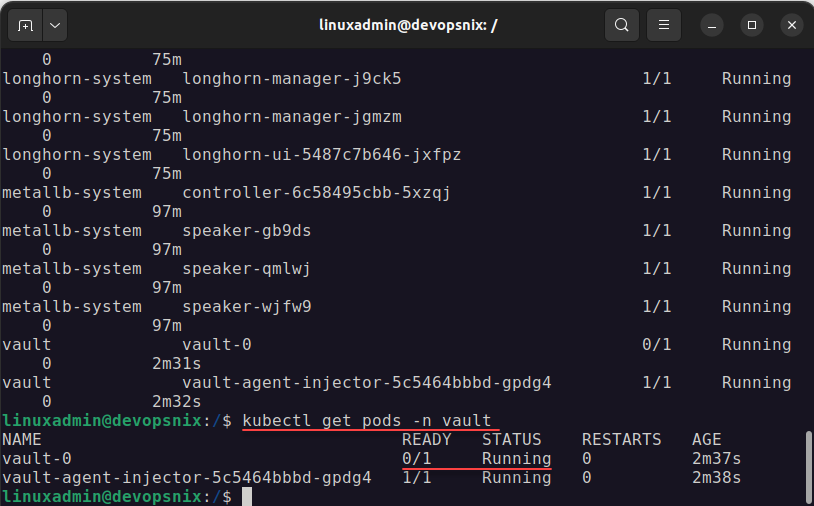

I started out with Docker and have, over the last couple of months moved to Swarm, having been nervous of the steep learning curve and infrastructure overhead of transitioning to K8s (I only have a single physical host). I have been recently having more thoughts about K8s though, not least because it is more widely used in the business environment than swarm.